Stock Code
301528

Metallic materials are prone to corrosion during long-term service, which poses potential safety hazards and may even lead to catastrophic accidents in severe cases. Therefore, early detection, timely prevention and remediation of corrosion are particularly critical to ensure enterprise production safety. The TFM ultrasonic testing technology provides an effective solution for corrosion inspection. It can accurately identify the location and morphological characteristics of corrosion defects, helping enterprises take targeted remedial measures in a timely manner.
Classification of Corrosion
According to the occurrence mechanism, corrosion can be divided into three major categories: chemical corrosion, electrochemical corrosion and physical corrosion.
1. Chemical Corrosion
Chemical corrosion refers to the damage caused by direct pure chemical reactions between the metal surface and non-electrolytes. Sulfur corrosion of metals in high-temperature gas and high-temperature oxidation of metals both fall into the category of chemical corrosion.
2. Electrochemical Corrosion
Electrochemical corrosion refers to the damage resulting from electrochemical reactions between the metal surface and ion-conductive media. It is the most prevalent and common type of corrosion, such as the corrosion of metals in the atmosphere, seawater, soil and various electrolyte solutions.
3. Physical Corrosion
Physical corrosion refers to the damage of metals caused by simple physical dissolution. It is characterized by the "splitting effect" on metal materials when low-melting-point metals penetrate into them. Since low-melting-point metals generally have low strength, they fracture preferentially under stress, thereby becoming the crack initiation source of metal materials.
Non-Destructive Testing of Corrosion
1. Test Specimens
(1) To simulate the corrosion condition, circular arc grooves were machined on ordinary steel blocks, as shown in Figure 1.
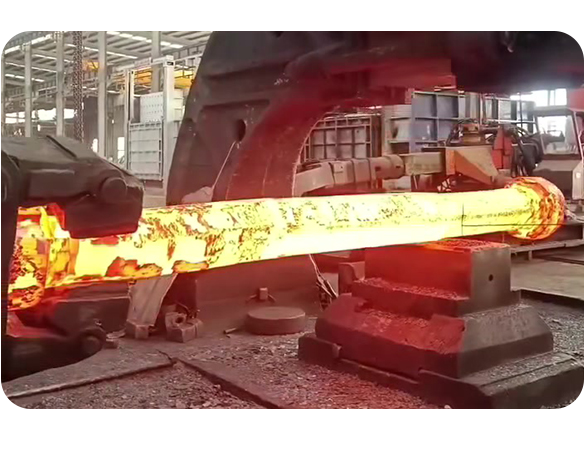
Figure 1 Test Specimen
2. Selection of Instrument and Probe
(1) The Novascan ultra-high resolution TFM phased array detector is adopted as the testing equipment.
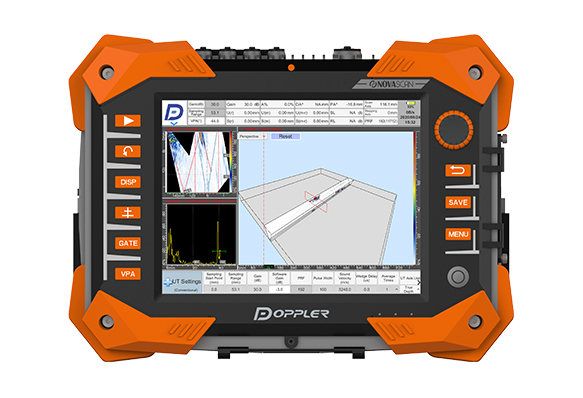
Figure 2 Novascan TFM Phased Array Detector
(2) Doppler 5L 128-0.8X10 CDE530 phased array probe.
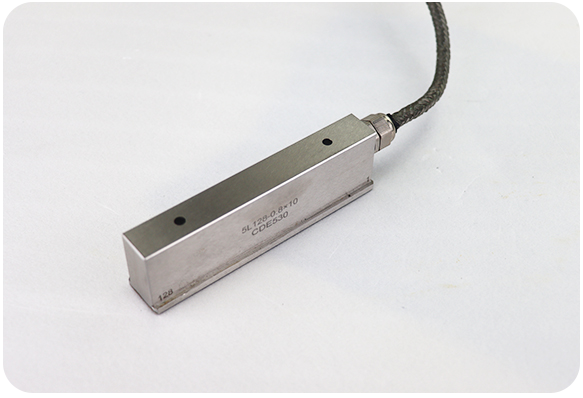
Figure 3 Phased Array Probe
Test Results
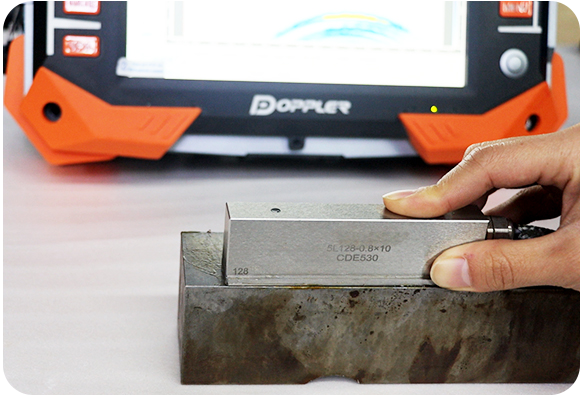
Figure 4 Test Schematic Diagram
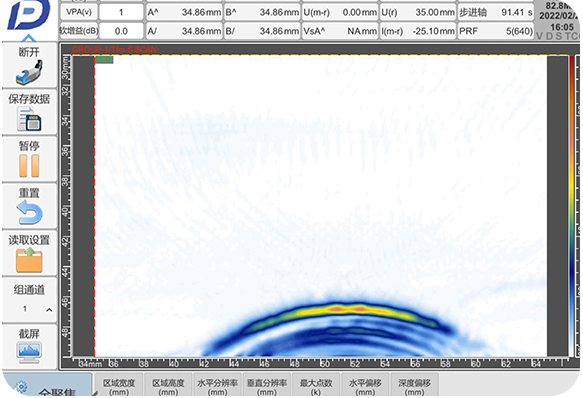
Figure 5 Detection Effect Image
Conclusion
Inspection was carried out on the test workpiece by adopting the Doppler Novascan TFM phased array detector equipped with a multi-element phased array probe. The results indicate that the total focusing method can effectively identify corrosion locations and reconstruct corrosion morphology with maximum precision, which delivers a positive effect on ensuring equipment safety and preventing safety-related accidents.